Retaining Walls & Concrete Masonry
Build strong retaining walls and masonry structures that solve drainage problems and prevent erosion.
Why Properties Need Retaining Walls
Sloped properties present unique challenges. Water runs downhill and causes erosion. Soil gradually shifts and slides. Usable flat space is limited. A properly designed retaining wall solves these problems by holding back soil, managing water flow, and creating level areas for landscaping or construction. Whether you need a small garden wall or a large structural retaining wall, the right solution prevents costly damage and makes your property more functional.
Here in Knightdale, NC, we deal with clay soils and seasonal rainfall that put pressure on retaining structures. A wall that is not built correctly will fail, sometimes spectacularly. We see walls tilting, cracking, and even collapsing when they were not designed for local conditions. That is why proper engineering matters. We calculate soil pressure, plan for drainage behind the wall, and build a foundation that will not settle or shift. The result is a wall that performs its job for decades without issues.
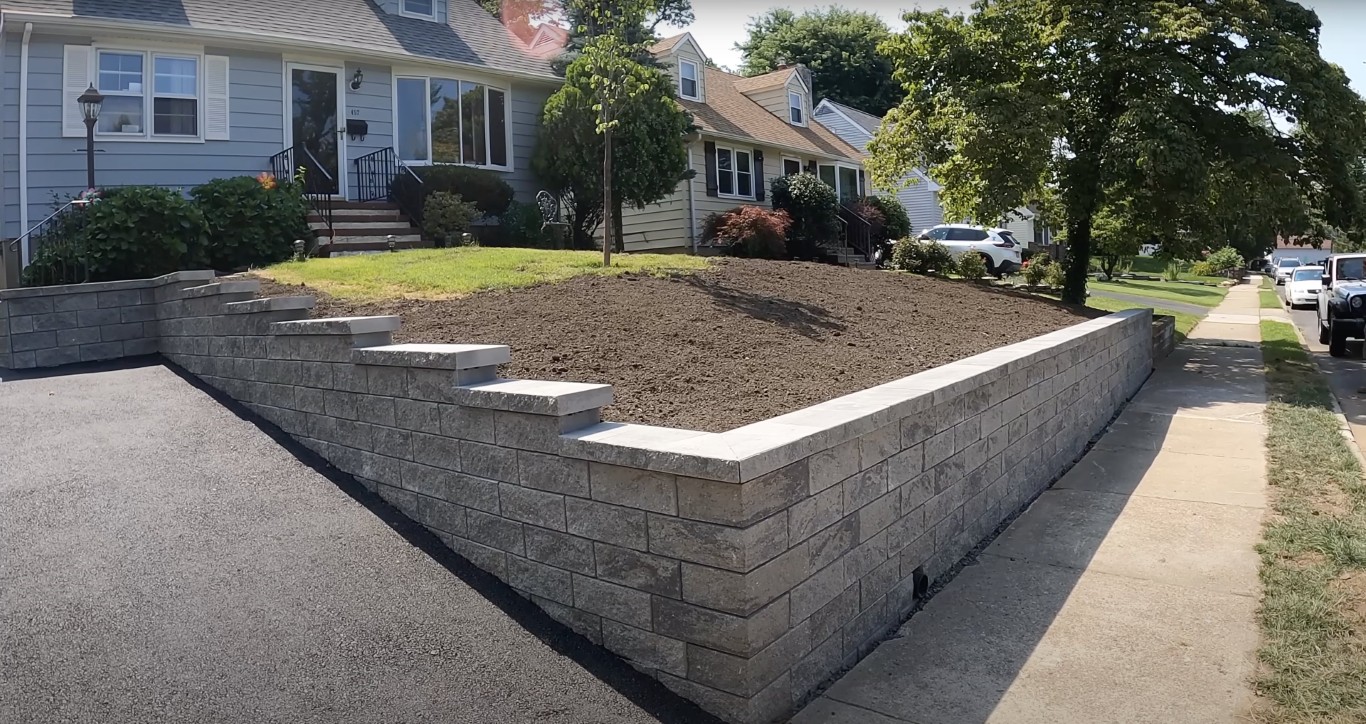
Beyond function, retaining walls add visual appeal to your property. Terraced landscaping creates interesting levels and planting areas. Walls define different zones in your yard. They can incorporate steps, curves, and decorative elements that enhance your outdoor space. Whether you choose poured concrete, concrete block, or stone veneer, a well-built retaining wall becomes a permanent feature that adds both beauty and value to your property.
Types of Retaining Walls We Build
Different situations call for different wall types. The height of the wall, soil conditions, budget, and desired appearance all factor into which solution works best. We have experience with various retaining wall systems and masonry techniques, so we can recommend the right approach for your project.
Retaining Wall Options
- Poured concrete walls: The strongest option for high walls or heavy loads. Can be finished smooth or textured and will last indefinitely when properly built.
- Concrete block walls: Built with reinforced masonry units. Good for medium height walls and can be faced with stone or stucco for better appearance.
- Segmental retaining walls: Modular block systems that interlock and rely on weight and friction. Work well for residential landscaping walls up to moderate heights.
- Garden and seat walls: Shorter decorative walls that define spaces, provide seating, or create raised planting beds. More about aesthetics than structural requirements.
- Stone veneer walls: Concrete or block walls faced with natural or manufactured stone for an upscale appearance that combines strength with beauty.
Walls over 4 feet tall typically require engineering and permits. We work with structural engineers to design walls that meet code requirements and handle the loads they will face. For smaller residential walls, our experience and understanding of local conditions guide the design. Well-built concrete retaining walls follow the same principles no matter where you live, and either way, you get a wall that is built to perform and built to last.
How We Build Retaining Walls That Last
A retaining wall is only as good as its foundation. We start by excavating to solid, undisturbed soil and installing a proper base. For taller walls, this might mean a poured concrete footing that extends below the frost line. Shorter walls may use a compacted gravel base. The foundation must be level and stable because any settling will cause problems with the entire wall.
Drainage is absolutely critical for retaining wall success. Water pressure building up behind a wall can cause it to fail no matter how strong the construction is. We install drainage pipes behind the wall to collect water and direct it away. Gravel backfill allows water to flow to these drains instead of pushing against the wall. Weep holes in the wall face let water escape. These drainage features might not be visible in the finished wall, but they are what keeps it standing through years of rain and seasonal ground saturation.
As we build up the wall, proper reinforcement and backfill compaction ensure long-term stability. For masonry walls, we place rebar in the cores and fill them with concrete. Block walls may include horizontal reinforcement as well. Each course is checked for level and alignment. The finished wall is both structurally sound and visually appealing. If you need other concrete work or walkways to complete your project, we can handle it all as part of a comprehensive site improvement plan.
Common Questions About Retaining Walls
Need a Retaining Wall Solution?
Contact us today for a site evaluation. We will assess your property and recommend the best retaining wall solution for your needs.
(984) 733-8891