Sidewalks, Walkways & Flatwork
Create safe, attractive walkways and flatwork that enhance your property and improve accessibility.
Why Concrete Sidewalks and Walkways Make Sense
A well-designed walkway does more than just connect point A to point B. It guides visitors to your front door, defines outdoor spaces, and keeps foot traffic off your lawn. Concrete walkways handle heavy use without developing ruts or soft spots like gravel paths. They do not need constant weeding and edging like loose stone or mulch paths. And they stay level and safe instead of shifting like pavers or stepping stones. For residential and commercial properties in Knightdale, NC, concrete walkways offer the best combination of durability, safety, and low maintenance.
Safety is a major consideration for any walking surface. Concrete provides a smooth, level path that reduces trip hazards. Proper installation includes adequate slope for drainage so water does not pool and create slippery spots or ice patches in winter. We can also add texture or broom finishes to increase traction in wet conditions. For commercial properties, ADA-compliant sidewalks ensure accessibility for everyone. These features make concrete the go-to choice for municipal sidewalks, business entrances, and residential walkways throughout the area.
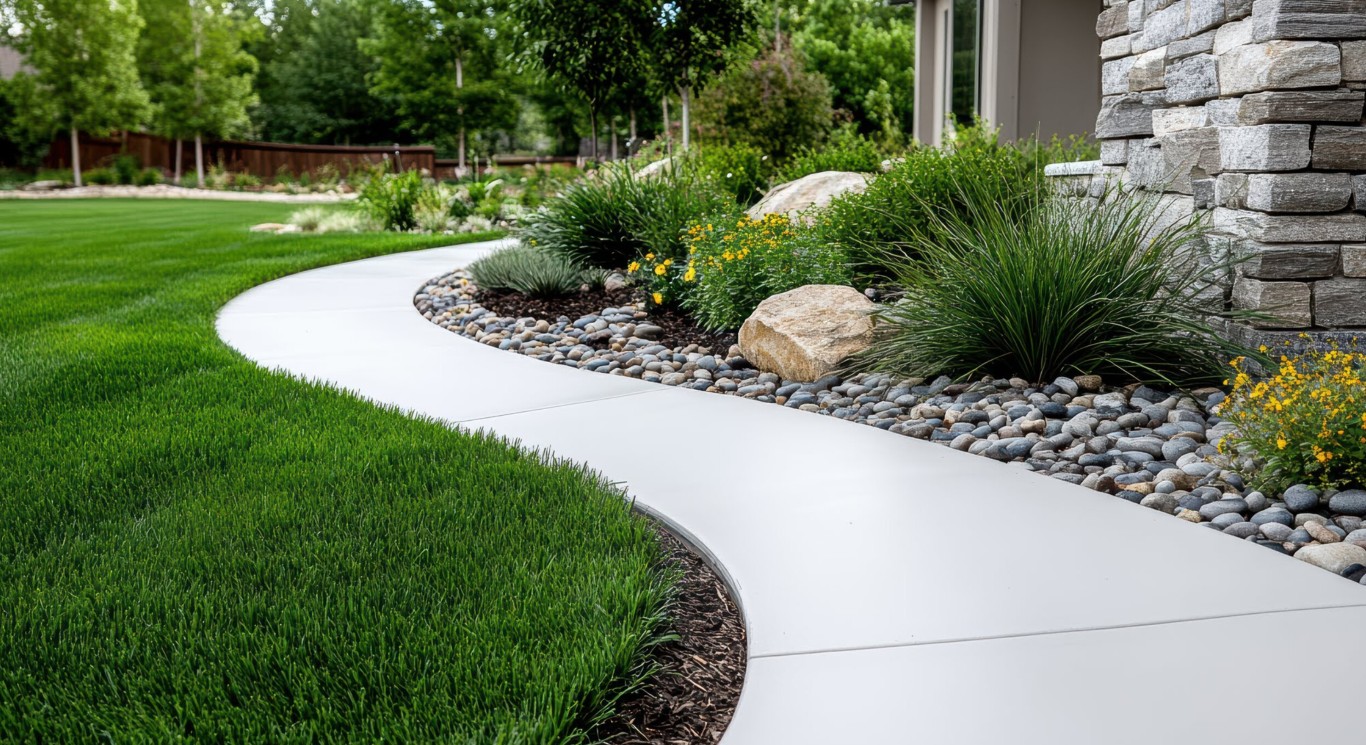
From a design perspective, concrete walkways work with any architectural style. Keep it simple with a standard width and straight lines, or get creative with curves, different widths, and decorative patterns. Border your walkway with contrasting colors or materials. Add steps where needed to handle grade changes. The flexibility of concrete lets you create exactly what your property needs while staying within budget.
Types of Flatwork We Install
Flatwork is the term we use for any horizontal concrete surface. This includes sidewalks, walkways, and various other applications around your property. Each type serves a specific purpose and may have different requirements for thickness, finish, and layout.
Common Flatwork Applications
- Front walkways: The main path from the street or driveway to your front door. Sets the tone for your property and needs to handle daily traffic.
- Side and back walkways: Connect different areas of your property like the driveway to the backyard or the house to a shed or garage.
- Public sidewalks: Municipal sidewalks along streets that must meet specific width, slope, and accessibility requirements.
- Commercial walkways: Paths around business properties, parking lots, and building entrances that need ADA compliance and heavy-duty construction.
- Aprons and transitions: The areas where driveways meet sidewalks or streets, and where walkways connect to other surfaces.
Each project starts with understanding how the space will be used and what codes or regulations apply. Residential walkways typically need 4 inches of concrete over a compacted base. Commercial and public sidewalks may require greater thickness and specific reinforcement. We handle all the details including permits, inspections, and making sure your walkway meets all applicable standards — the same attention to detail that quality concrete sidewalk building demands on every project.
How We Build Quality Walkways
A walkway needs to do more than just look good on the day we finish it. It needs to stay level, drain properly, and resist cracking for decades. That happens when we pay attention to the details that most people never see. The base preparation, proper grading, and correct concrete thickness all contribute to long-term performance. We also plan for expansion and contraction by including control joints at the right spacing. These joints give the concrete a place to move without creating random cracks across your walkway.
Drainage is critical for any outdoor concrete. We slope walkways slightly so water runs off instead of pooling. Even a small amount of standing water can create ice hazards in winter and speed up deterioration over time. We also make sure water drains away from foundations and does not create erosion problems. Sometimes this means adjusting grades around the walkway or adding drainage solutions as part of the project.
The finish we apply affects both safety and appearance. A smooth trowel finish looks clean but can be slippery when wet. A broom finish adds texture for better traction. For decorative applications, stamping or coloring creates visual interest. We will explain the pros and cons of each option so you can choose what works best for your situation. After installation, proper curing and sealing protect your investment and keep your walkway looking great. If you need repairs down the road, we handle that too.
Common Questions About Sidewalks and Walkways
Ready to Add a New Walkway?
Contact us today for a free estimate. We will visit your property and help you plan the perfect walkway.
(984) 733-8891